


Politics and market dynamics contribute to a slower pace of expansion for Canada’s charging networks
Canada’s charging infrastructure grew by 17.4 per cent since March of 2025.
Politics and market dynamics contribute to a slower pace of expansion for Canada’s charging networks
After several years of rapid expansion, new installations in Canada’s public electric vehicle charging network in 2025 continued across the country, but at a slower pace than the surge seen in the early 2020s. Shifting market dynamics and unruly politics have caused many of the headwinds facing the EV sector right now, yet the charging story of the past year was not one of stagnation but of transition.
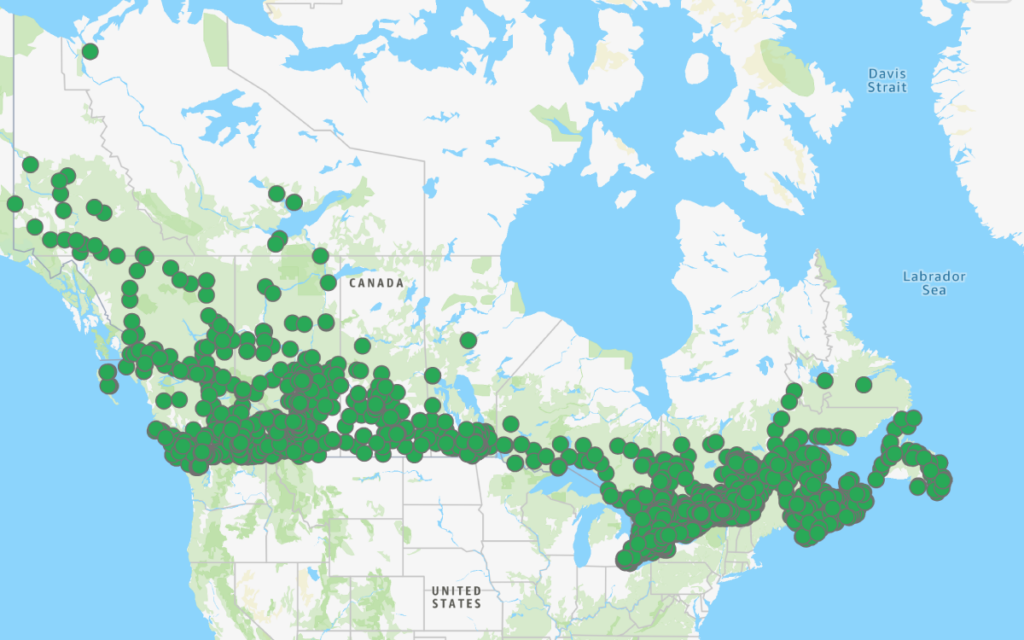
According to data from Natural Resources Canada’s (NRCan) Alternative Fuelling Station Locator, as of March 25 there are now at least 39,654 public charging ports at 14,743 locations nationwide. Some networks are not listed with NRCan.
This is a 17.4 per cent year-over-year increase.
While that marks a dip from the 24.2 per cent growth recorded in 2025 and 32.7 per cent the year prior, it still represents steady, tangible progress in building out the infrastructure needed to support Canada’s electrification goals.
Of the overall numbers, 31,172 ports (12,353 stations) are Level 2 chargers, while 8,431 ports (2,706 stations) are DC fast chargers. In March last year, by comparison, there were 27,456 Level 2 ports (11,087 stations) and 6,309 DC fast charging ports (2,192 stations).
Notably, the expansion of DC fast charging continues to outpace Level 2 installations, rising nearly 33.6 per cent over the past 12 months, compared to the 13.5 per cent increase in Level 2 chargers.
Network-by-network roundup
Below, we present a detailed, network-by-network snapshot of each EV charging network’s assets and offerings. DC fast and Level 2 charging stations operated by every public national and provincial/regional EV charging provider in Canada are listed.
This year’s dataset reflects a market that continues to evolve, not only through expansion by established players, but also through the arrival of new entrants, including Autel, Chaevi, ChargeUp, EVGateway, Ford Charge, Loop Global and SureCharge. Looking ahead for 2026, early signs of what is to come are also visible: we have included a first look at the Mercedes-Benz High-Power Charging network, following the commissioning of its first Canadian charging sites in January.
Beyond raw infrastructure counts, our roundup highlights broader industry shifts shaping network development. These include the growing adoption of the North American Charging Standard (NACS) connectors, increased deployment of Plug & Charge and Autocharge functionalities, and a greater emphasis on accessibility features such as pull-in charging stations for vehicles with trailers. We also spotlight other business trends, location highlights, partnerships, and notable future plans.
Methodology and data transparency
To ensure a more consistent, “apples-to-apples” comparison across networks, this year’s analysis places greater emphasis on data from NRCan’s Alternative Fuelling Station Locator, where available. Total charger counts are primarily based on NRCan’s database, supplemented by direct input from network operators. Many charging operators did not respond or declined to provide comment when approached by Electric Autonomy.
Electric Autonomy reached out to NRCan to better understand how its data is collected, with the aim of ensuring greater transparency in our reporting.
According to NRCan, most station data is collected via application programming interfaces (APIs), allowing networks to automatically share real-time information with the federal database. These API-connected stations are updated nightly, with new locations typically appearing within 24 hours of being reported.
Additional data is gathered through spreadsheets submitted from charging networks and other verified sources, with update frequencies ranging from monthly to annually, depending on the provider. Each station is also periodically verified, often through direct contact with operators, to ensure it remains operational and accurately represented.
Not all networks are captured in the NRCan database. In some cases, says NRCan, this is due to ongoing efforts to establish data-sharing agreements, lack of response from operators, or a network’s focus on private-use installations such as fleets, workplaces or multi-unit residential buildings. Because participation in the locator is voluntary (unless tied to specific funding programs), gaps can occur. In these instances, Electric Autonomy has relied on data provided directly by the network operators.
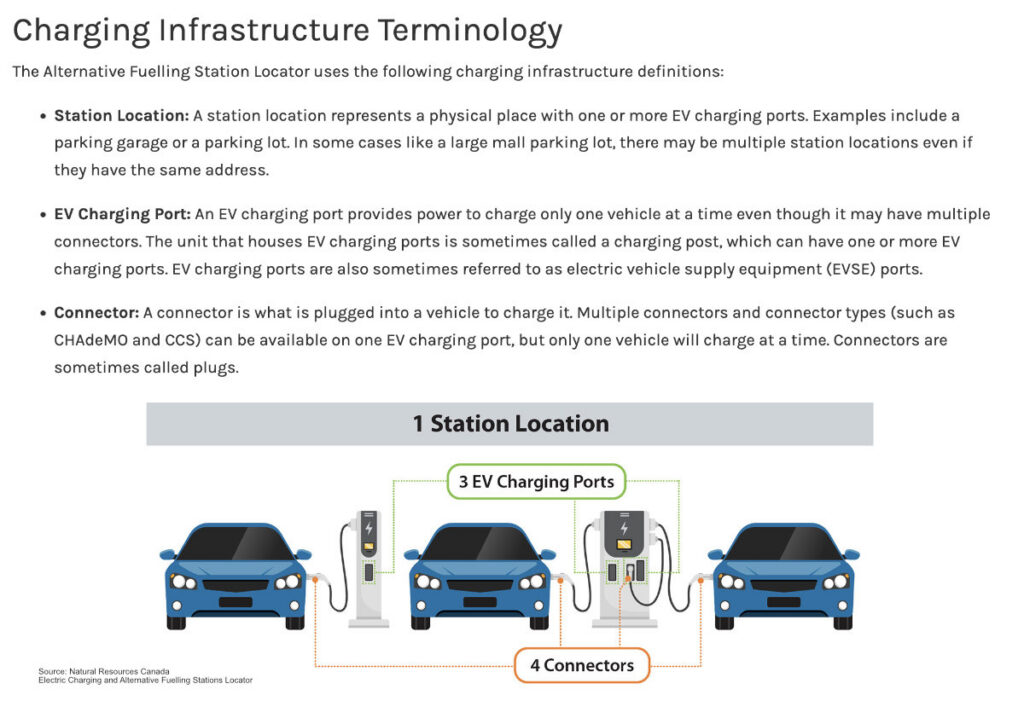
Finally, consistent with NRCan’s approach, network presence in this report will be measured by both station locations and total charging ports. Where possible, both metrics are presented to provide a clearer picture of each network’s footprint and relative scale across Canada.
National Networks
Tesla
- DC fast charger: 2,892 ports, 274 stations
- Level 2: 1,709 ports, 577 stations
The Tesla Supercharger network continued its steady expansion in 2025, with more than 500 new DC fast charging ports added across Canada, slightly below initial plans due to utility energization delays. Tesla’s Level 2 charger network footprint also grew, with more than 1,000 Tesla Destination charging ports deployed by third-party partners.
In total, the network says it now exceeds 3,000 DC fast charging ports across more than 300 locations nationwide, with all Supercharger sites capable of delivering speeds above 100 kW.
For 2026, Tesla is targeting the addition of more than 400 new DC fast charging ports. Over 90 per cent of Tesla Superchargers in Canada are currently open to all EVs, with 100 per cent of new sites to be open to all EVs.
The network plans to begin deploying its next-generation V4 Supercharger cabinets (capable of delivering over 500 kW) in Canada in 2026.
Tesla also has some pull-through charging stations specifically designed for vehicles with trailers installed across Canada. Its first pull-through Supercharger station opened in Manning Park, B.C., in 2024.
FLO
- DC fast chargers: 1,022 ports, 647 stations
- Level 2: 8,427 ports, 2,921 stations
FLO continued to scale its national footprint in 2025. A spokesperson for the network told Electric Autonomy that more than 150 of its charging stations are capable of delivering speeds of between 320 kW and 480 kW. FLO is also continuing to roll out chargers with NACS connectors and offers Plug & Charge capability, specifically enabled for GM EV drivers on its DC fast chargers across Canada.
In 2025, FLO experienced a mix of momentum and setbacks. The network expanded its footprint through a partnership with Tim Hortons to install DC fast chargers at 100 restaurant locations across Canada, and signed a roaming deal with SWTCH Energy. FLO drivers also gained access to more than 110,000 additional public chargers through partnerships with BC Hydro EV, ChargePoint, eCharge Network, the Electric Circuit and Shell Recharge.
With its FLO Ultra all-in-one DC fast chargers, the network offers flexible site designs, including both pull-through and traditional pull-in configurations.
However, the year also brought challenges. FLO closed its EV charger manufacturing facility in Quebec in the summer of 2025, citing market uncertainty, shifting government policies and U.S. trade tensions, resulting in layoffs.
For 2026, the spokesperson says FLO plans to “maintain a consistent deployment” of charging infrastructure, to support the “continued development of the Canadian EV industry.”
Peaks to Prairies
- DC fast chargers: 20 stations
- Level 2: 2 stations
The Peaks to Prairies network is a community-led initiative launched in 2019 by the Alberta Southwest Regional Alliance, SouthGrow Regional Initiative, Medicine Hat College, and the cities of Calgary, Lethbridge and Medicine Hat to expand EV charging access across southern Alberta.
FLO is its network operator.
Peak to Prairies network is no longer expanding, having completed the installation of 20 DC fast chargers rated at 50 kW the same year it was launched. It is currently owned and operated by ATCOenergy.
Peaks to Prairies does not offer NACS connectors and does not include pull-through charging stations.
Aura Charging Network
- DC fast chargers: 67 ports, 13 stations
- Level 2: 29 ports, 4 stations
The Aura EV charging network was launched in 2022 by Baseload Power Corp. and is supported by FLO’s hardware and operating platform. Its chargers are currently located across Quebec and Ontario, with the company’s website listing 67 DC fast charging and 29 Level 2 charging ports.
Aura Charging Network did not respond to Electric Autonomy’s request for comment. However, according to publicly available information on its website, the company has outlined plans for significant expansion, with proposed sites across 43 locations. These include a westward push into Alberta, with sites in Banff and Calgary, as well as eight planned locations in British Columbia, including Vancouver, Kamloops and Merritt.
The company has previously said that all newly installed and future Aura chargers will include NACS connectors. It is unclear if the network has any pull-through chargers available.
The Aura network is not listed in NRCan’s database.
ChargePoint
- DC fast chargers: 594 ports, 491 stations
- Level 2: 7,532 ports, 4,076 stations
ChargePoint operates one of Canada’s largest EV charging networks. The network does not own or operate stations directly; instead, it supplies hardware and software to customers who own and manage the chargers, said a ChargePoint spokesperson to Electric Autonomy.
In total, ChargePoint reports more than 385,000 active ports under management across North America and Europe, including over 41,000 DC fast-charging ports.
The network continues to expand deployment of NACS connectors, offering stations with optional NACS and its Omni Port solution, which combines J1772 and NACS on AC chargers and CCS1 and NACS on DC chargers.
While ChargePoint does not set centralized deployment targets due to its business model, the spokesperson says, it remains active in advancing charging technology and partnerships. In 2025, the company announced collaborations with General Motors and Eaton, introduced anti-vandalism solutions to address cable theft, launched a next-generation software platform, and unveiled a new bidirectional (V2G) charging architecture.
ChargePoint has chargers across North America that can accommodate charging with vehicles that have trailers to pull through.
RechargÉco (EcoCharge)
- DC fast chargers: 166 ports, 135 stations
- Level 2: 0 ports, 0 stations
RechargÉco added 56 new DC fast-charging ports across 28 stations in 2025. The network comprises of 135 DC fast-charging stations nationwide, primarily offering charging speeds of 125 kW, alongside a smaller number of 180 kW and 200 kW units.
While RechargÉco has not yet implemented Plug & Charge or Autocharge capabilities, all sites provide NACS-to-CCS adapters for use with any compatible vehicle.
RechargÉco plans to add at least 20 new sites in 2026, representing roughly 40 additional DC fast-charging stations.
“Our 2026 expansion strategy remains focused exclusively on DC fast charging infrastructure,” says a spokesperson for the company in an email to Electric Autonomy.
The RechargÉco network is not listed in NRCan’s database.
Electrify Canada
- DC fast chargers: 248 ports, 52 stations
- Level 2: 0 ports, 0 stations
Electrify Canada, a Volkswagen Group subsidiary, operated a network of 248 charging ports, according to data from NRCan. All are capable of delivering speeds of either 150 kW or 350 kW.
Electrify Canada did not respond to Electric Autonomy’s request for comment, but in the past confirmed that future installations would be standardized at 350 kW.
The network supports Plug & Charge functionality for compatible vehicles and offers complimentary charging for select models from Audi, BMW, Lucid, Porsche and Volkswagen. It also announced plans to introduce NACS connectors in 2025. Electrify Canada offers around six locations that feature pull-through charging capabilities across Canada.
Parkland (On the Run)
- DC fast chargers: 58 ports, 10 stations
- Level 2: 0 ports, 0 stations
On The Run Charging, a North American convenience retail network operated by Parkland Corporation, has 50 DC fast charging ports nationwide capable of delivering 180 kW or above. (As of November 1, 2025, Parkland was acquired by Sunoco LP.)
The network also moved into higher-powered charging through a partnership with ABB, launching its first 400 kW site in Delta, B.C., in April 2025. That location features three chargers, including one capable of delivering up to 400 kW and two rated at 180 kW.
Looking ahead, Parkland has set a target of deploying up to 1,800 chargers by 2028. In September 2025, the company secured $9.5 million in funding from the Government of Quebec under its 2030 Plan for a Green Economy to support the installation of 104 charging ports across 14 Marché Express sites (the province’s branding for On the Run stores).
On The Run Charging currently supports CCS and CHAdeMO connectors. Some selected sites have begun offering NACS connectors. On the Run does not offer pull-through charging stalls.
On the Run did not respond to Electric Autonomy’s request for comment.
Petro-Canada
- DC fast chargers: 23 ports, 12 stations
- Level 2: 3 ports, 3 stations
Based on NRCan data, the network currently has 23 DC fast charging ports and two Level 2 charging ports nationwide.
Petro-Canada did not respond to Electric Autonomy’s request for comment on this story. However, the company previously reported to Electric Autonomy in 2025 that it continued to invest in its coast-to-coast “Electric Highway” network, focusing on upgrading existing infrastructure rather than rapid expansion. This included the rollout of new hardware and backend systems aimed at improving charger reliability, reducing charging times and enhancing the overall customer experience.
Petro-Canada also undertook a broader network refresh, transitioning to a new operating platform and expanding app compatibility, while maintaining tap-to-pay functionality at its stations. The company is optimizing its footprint by adding new sites in high-demand areas and upgrading existing locations with chargers offering speeds between 60 kW and 200 kW.
Petro-Canada said it expects to add approximately 12 new charging sites by mid-2026, primarily in urban and high-traffic corridors, while continuing to modernize its existing network to improve uptime and customer service.
Petro-Canada stations do not offer NACS plugs as an option for charging, nor pull-through charging stations for trailers.
Shell Recharge Solutions
- DC fast chargers: 168 ports, 52 stations
- Level 2: 19 ports, 9 stations
Shell Recharge Solutions (formerly Greenlots) did not respond to Electric Autonomy’s request for network data. According to NRCan, the network increased to 168 DC fast charging ports across 52 locations. The network currently has 19 Level 2 ports at nine sites nationwide.
Shell notes on its website that its Recharge network is already deployed across multiple provinces in Canada and continues to expand as part of its broader global strategy, which targets more than 70,000 public charge points by 2025 and 200,000 by 2030. In Canada, the network offers a range of charging speeds up to 180 kW, depending on site configuration and vehicle compatibility.
A few Shell Recharge stations in Ontario, Alberta and B.C include locations designed for pull-through charging. NACS connectors are not available.
SWTCH Energy
- DC fast chargers: 64 ports, 23 stations
- Level 2: 1,574 ports, 454 stations
SWTCH Energy declined to participate in this year’s EV charging network round-up. According to NRCan data, the Toronto-based company expanded its public network to a total of 64 DC fast charging ports and 1,574 Level 2 ports.
The network continued to strengthen interoperability through roaming agreements, including a partnership with FLO, building on its existing arrangement with Electric Circuit.
SWTCH also completed a multi-tenant EV charging project, noting that insights from the initiative will help inform how charging in high-density residential buildings can be managed to reduce grid strain.
SWTCH has previously told Electric Autonomy that it planned to integrate NACS connectors across both its Level 2 and DC fast chargers in 2025. The network does not offer pull-through charging sites.
Hypercharge
- DC fast chargers & Level 2: 5,700 ports, 585 stations
Hypercharge significantly expanded its footprint in 2025, deploying a total of 2,420 new charging ports, including 2,352 Level 2 ports and 68 DC fast charger ports, said a spokesperson for the network to Electric Autonomy. Of its fast-chargers, 52 ports are capable of delivering speeds above 100 kW.
As of December 31, 2025, the company says it has delivered 5,700 charging ports across over 585 sites nationwide since launching operations in 2021. Hypercharge’s focus is on multi-unit residential, commercial and fleet customers.
The company has integrated NACS connectors into its offerings, with its Halo Level 2 chargers available in both J1772 and NACS configurations. It also supplies DC fast chargers and additional Level 2 units with NACS options through hardware partners, and has begun deploying these ports across its network.
Hypercharge said it expects continued growth in 2026. In January, it launched Hypercorp Energy Solutions, a new initiative aimed at helping commercial and multi-family properties manage energy generation, storage and optimization alongside EV charging infrastructure.
Hypercharge does not offer pull-through charging stations.
The Hypercharge network is not listed in NRCan’s database.
Circle K/ Alimentation Couche-Tard Recharge
- DC fast chargers: 179 ports, 38 stations
- Level 2: 0 ports, 0 stations
Alimentation Couche-Tard, based in Quebec and also the owner of the Circle K store brand, added 71 DC fast charging ports, operating at an additional nine stations across British Columbia, Alberta, Ontario and Quebec.
Alimentation Couche-Tard did not respond to Electric Autonomy’s request for comment for this tally.
According to NRCAN, the network has 179 DC fast charging ports at 38 stations.
The network’s stations support CCS and CHAdeMO plugs. Tesla drivers can use them with an adapter, reads the company’s website. The network has pull-through charging stations available in Quebec.
OpConnect
- DC fast chargers: 2 ports, 1 station
- Level 2: 209 ports, 45 stations
OpConnect is a Portland, Oregon-based charging network operator that did not respond to Electric Autonomy’s request for information for this story.
The network, according to NRCan data, did not add any new DC fast charging ports in 2025. It did add 16 new Level 2 ports and two new stations.
OpConnect allows for up to four EVs to charge at one station simultaneously.
All of OpConnect’s charging stations are equipped with SAE J1772 connectors. It is unknown if it plans to incorporate NACS. The network does not offer pull-through charging stations in Canada.
Blink Charging
- DC fast chargers & Level 2: 34 stations
Blink Charging did not respond to Electric Autonomy’s request for information.
Based on Blink Charging’s website, there are 34 EV charging stations located across Canada.
In 2025, Blink launched a Level 2 charging station, the Blink Series 7 ISO, which offers plug-and-charge capabilities.
At the beginning of 2024, some Blink charging stations started to feature an NACS plug. The network does not have pull-through charging stations in Canada.
Ford Charge
- DC fast chargers: 88 ports, 25 stations
- Level 2: 0 ports, 0 stations
The American automaker Ford launched Ford Charge in August 2025, offering DC fast charging at more than 320 Ford dealerships across the U.S. and Canada. The company says the network is designed to provide reliable public charging for all compatible EVs, not just Ford models.
Ford Charge is part of Ford’s BlueOval Charge Network, which the automaker describes as North America’s largest integrated charging network, giving drivers access to thousands of public chargers from different network operators, including Tesla Superchargers with NACS adapter.
According to NRCan, there are currently 88 DC fast-charging ports across 25 Ford dealership locations in Canada. Ford did not respond to Electric Autonomy’s request for information.
Provincial/Regional Networks
The Electric Circuit (Le Circuit électrique)
- DC fast chargers: 1,395 ports, 497 stations
- Level 2: 6,375 ports, 2,575 stations
The Electric Circuit network continued its large-scale expansion in 2025, adding 269 DC fast-charging ports and 1,457 Level 2 ports across its network. Some locations host both DC fast charger and Level 2 charging, noted a spokesperson for Electric Circuit to Electric Autonomy. Among its fast-charging network, 847 ports deliver speeds of 100 kW or more, including 10 ultra-fast chargers rated at 350 kW and above.
Looking ahead to the future, the network’s spokesperson says it is working toward a broader objective of deploying 2,530 DC fast chargers by 2030 globally. In 2026, it plans to add approximately 210 new fast-charging ports, alongside continued growth in Level 2 infrastructure through partner-led deployments, which are expected to exceed 1,000 additional ports.
The Electric Circuit is also looking to advance user experience and technology integration. In 2025, it introduced Autocharge, which is similar to Plug & Charge as a feature that enables seamless charging once a vehicle is plugged in at compatible stations.
The network is gradually incorporating NACS connectors, “while keeping a substantial offer of CCS connectors to support the vast majority of EVs already on the roads,” says the spokesperson.
Ongoing innovation efforts include testing cable-free charging, battery-integrated charging stations and Megawatt Charging Systems (MCS), alongside continued improvements to interoperability and its mobile platform.
The Electric Circuit also offers pull-through charging stations designed to accommodate electric vehicles towing trailers.
Ivy Charging Network
- DC fast chargers: 235 ports, 48 stations
- Level 2: 79 chargers, 32 stations
The Ivy Charging Network, now wholly owned by Hydro One (previously it was a joint venture with Ontario Power Generation), added 24 new DC fast-charging ports — slightly exceeding its initial target of 22 for 2025, said an Ivy spokesperson to Electric Autonomy.
Ivy’s fast-charging network now features 62 DC fast charging ports delivering speeds above 100 kW. While the network does not yet include chargers rated at 350 kW or higher, says the spokesperson, it has focused on improving accessibility and compatibility. All ONroute locations offer NACS connectors or adapters, with 11 sites featuring dual chargers equipped with native CCS, NACS and CHAdeMO connectors to support a wide range of EVs. The company is continuing to prepare the rest of its network for the broader industry transition to NACS.
Ivy does not currently offer Plug & Charge or Autocharge functionality and has no plans for additional charger deployments in 2026. The network also does not include pull-through charging stations.
Jule
- DC fast chargers: 76 ports, 25 stations
- Level 2: 0 ports, 0 stations
Jule Power is the brand name of North American battery storage systems and DC fast electric vehicle charging provider, eCAMION.
The network did not respond to Electric Autonomy’s request for information, but according to NRCan, the network added six new DC fast charging ports and two new stations to its network in 2025.
Jule’s DC fast-charging stations are integrated with its proprietary Jule Hub, which acts as a power amplifier between the grid and the vehicle. This system allows chargers to deliver up to 350 kW per port.
The network’s chargers are equipped with CCS, CHAdeMO, and some NACS connectors. Jule’s network does not offer plug-and-charge capabilities, nor does it include pull-through charging stations.
BC Hydro EV
- DC fast chargers: 684 ports, 178 stations
- Level 2: 195 ports, 56 stations
Leaders in Canada’s public charging network, BC Hydro expanded its infrastructure in 2025 by adding 382 new ports, including 241 DC fast charger ports and 141 Level 2 stations, exceeding its target of 350 ports, says a company spokesperson to Electric Autonomy.
By year-end, the network had 239 ports delivering 100 kW or more, including seven 350 kW units. In January 2026, BC Hydro unveiled its first 400 kW ultra-fast chargers at the University of British Columbia’s Burnaby campus and Nanaimo’s Rock City Centre.
The network is actively incorporating NACS connectors into all new hub sites, says the spokesperson. BC Hydro is also exploring future Plug & Charge or Autocharge capabilities to streamline the user experience. BC Hydro also unveiled its first fully portable DC fast charger in the Village of Lumby in November 2025.
“We have plans to continue expanding our charging network in 2026,” says the spokesperson. The focus will be on increasing charger density in urban and high-demand areas while expanding access to underserved regions. The network now includes pull-through charging at multiple locations to accommodate vehicles towing trailers. BC Hydro has also taken over operation of 22 highway rest-stop charging sites previously managed by the B.C. Ministry of Transportation and Transit.
In addition to infrastructure growth, BC Hydro enhanced interoperability with 14 roaming partners and plans further integrations via ChargeHub. The network also deployed large hub sites with eight or more ports and continues to focus on network improvements and new features, such as credit card tap payment, says the spokesperson.
EV Connect
- DC fast chargers: 45 ports, 35 stations
- Level 2: 59 ports, 26 stations
EV Connect operates a network of 104 charging ports in Canada. The company’s platform is hardware-agnostic, supporting all plug types, and deploys NACS charging stations from partner providers when available. The network does not include pull-through charging stations.
EV Connect supports Plug & Charge functionality specifically for General Motors vehicles. The company did not respond to Electric Autonomy’s request for comment.
eCharge Network
- DC fast chargers: 61 ports, 45 stations
- Level 2: 140 ports, 96 stations
The eCharge Network is owned and operated by New Brunswick Power.
The network did not respond to Electric Autonomy’s request for comment for this story.
According to NRCan data, the eCharge network added 12 new DC fast charging ports and nine Level 2 charging ports to its network in 2025. The DC fast charging stations have speeds ranging from 50 kW to 100 kW.
The network does not offer NACS plugs or pull-through charging stations.
Co-op Connect
- DC fast chargers & Level 2: 130 ports, 43 stations
Co-op Connect added four Level 2 ports and 66 DC fast-charging ports in 2025. All DC fast chargers operate at a maximum 100 kW. In 2025, the network also completed equipment replacements at four Manitoba sites.
The network plans to roll out NACS connectors, pending updates from its equipment provider, FLO. Plug & Charge is available for GM vehicles via the FLO network, while Autocharge functionality is not offered, says a spokesperson for Co-op Connect in an email to Electric Autonomy.
Co-op Connect does not have plans to add new chargers in 2026. The network includes pull-through charging stations for vehicles with trailers. “When space allows, pull-through configurations are our preferred design,” says the spokesperson.
The Co-op Connect network is not listed in NRCan’s database.
takeCHARGE Electric Vehicle Charging Network
- DC fast chargers & Level 2: 66 ports, 33 stations
The takeCHARGE Charging Network is a joint venture operated by Newfoundland and Labrador Hydro and Newfoundland Power.
The network currently includes 33 DC fast chargers and 33 Level 2 chargers, with charging speeds ranging from 7 kW to 62.5 kW. ChargePoint is the equipment and software supplier for the takeCHARGE network.
According to a Newfoundland Power spokesperson from last year, there were no plans to add additional public charging stations to the takeCHARGE network in 2025. The company did not respond to Electric Autonomy’s request for comment for this story.
The network does not support NACS plugs and has no immediate plans to add them. The takeCHARGE Charging Network also does not offer pull-through charging stations.
The takeCHARGE Charging network is not listed in NRCan’s database.
Jolt
- DC fast chargers: 7 ports, 7 stations
- Level 2: 0 ports, 0 stations
Australia-based Jolt launched its first EV charging stations in Ontario in September 2024. The network now has a total of six DC fast charging stations in Ontario and has expanded into Alberta with one charging station installed in 2025. Through the Jolt app, drivers receive 7 kWh of free daily charging, enough to add about 40 km to 50 km of range in 15 to 20 minutes.
In February 2025, the company secured $194 million in funding from the Canada Infrastructure Bank to deploy up to 1,500 EV chargers in urban centres across Canada.
Jolt stations currently support CCS1 connectors, with NACS compatibility under development. The network also rolled out AutoCharge in its native Australia in 2025. JOLT’s EV charging network focuses on installing curbside, fast-charging stations in high-density urban areas, rather than pull-through chargers.
The Jolt network is not listed in NRCan’s database.
Green P Charging
- DC fast chargers: 42 ports
- Level 2: 495 ports
Green P Charging, part of the Toronto Parking Authority’s Green P Parking network, is spearheading the expansion of EV charging infrastructure across Toronto. The network provides both off-street and on-street charging options.
In 2025, the network added of 62 Level 2 ports and 12 DC fast-charging ports, slightly below its planned rollout for the year, says a spokesperson for the networks in an email to Electric Autonomy. As of March 2026, the network operates a total of 537 charging ports across Toronto.
Green P Charging does not yet operate chargers above 100 kW, but it plans to introduce its first 100 kW DC fast chargers in 2026, beginning at downtown Toronto locations. The network has deployed NACS connectors at nearly half of its fast-charging sites and aims to complete rollout across its DC fast charging network by 2027. Plug & Charge capabilities are also under evaluation as part of efforts to improve user experience and interoperability. There are no chargers that are pull-through currently, but the network says it is actively evaluating adding spaces where possible.
Green P Charging plans to continue expanding with an additional 10 Level 2 charging ports in 2026 and is pursuing a strategic partnership with a national charging provider to accelerate deployment of fast and ultrafast infrastructure, says the spokesperson.
The Green P Charging network is not listed in NRCan’s database.
HoneyBadger Charging
- DC fast chargers: 0 ports, 0 stations
- Level 2: 14 chargers, 7 stations
HoneyBadger is a Vancouver-based EV charging network that added 13 Level 2 charging ports across 12 locations in 2025. The network does not currently operate DC fast chargers.
The network is rolling out NACS connectors and supports Plug & Charge/Autocharge on select private installations, while public stations rely on the HoneyBadger app for session management and payment, said a spokesperson for the network to Electric Autonomy.
“In 2026, HoneyBadger Charging expects to continue growing its Level 2 charging network. While we do not currently operate DC fast chargers, we remain open to evaluating DC fast charging opportunities where they make strategic and operational sense,” says the spokesperson.
HoneyBadger aims to grow its Level 2 network to 200 ports. The company is also expanding payment options to include platforms such as WeChat Pay and Alipay, with Bitcoin acceptance under exploration, reinforcing a focus on convenience and customer experience. HoneyBadger does not offer any pull-through charging stations specifically designed for vehicles with trailers.
7Charge
- DC fast chargers: 30 ports, 9 stations
- Level 2: 0 ports, 0 stations
The 7Charge charging network was launched in 2024. It currently has a total of 30 DC fast charging ports at nine stations and no Level 2 charging infrastructure. The network offers charging speeds between 100 kW and 180 kW.
7Charge stations feature CCS and CHAdeMO plug types, but Tesla drivers can also use the network with a DC fast charging adapter, says the network on its website.
There are currently two new charger installations planned for Canada in 2026.
7Charge did not respond to Electric Autonomy’s request for comment.
Lakeland EV Charging
- DC fast chargers: 37 ports, 11 stations
- Level 2: 30 ports, 9 stations
In 2025, Lakeland EV Charging added 13 Level 2 ports across three sites, matching its initial expansion plans for the year. The network does not operate Plug & Charge or Autocharge stations but provides multiple payment options, including mobile app, website, RFID card, credit card tap on 180 kW chargers and roaming via ChargeHub.
Differing from the NRCan numbers listed above, a Lakeland spokesperson said the company’s network includes 34 Level 2 chargers, 10 30 kW chargers and 12 dual-port 180 kW chargers, the latter of which can simultaneously charge two vehicles at 90 kW per port. The network currently has four NACS connectors on Level 2 sites, with plans to upgrade 180 kW chargers and future installations to include 50 per cent NACS ports, said a Lakeland spokesperson to Electric Autonomy.
For 2026, Lakeland plans to add 18 Level 2 chargers, one 120 kW charger, and 22 dual-port 240 kW chargers capable of charging two vehicles simultaneously at 120 kW. By year-end, the network is expecting to have a total of 132 public charging ports.
“As we continue to grow, 2027 will see an additional 14 240kW chargers at seven new sites across central Ontario,” says the spokesperson.
Lakeland’s network does not have chargers specifically designed for trailers to pull through, however, the spokesperson says they have anecdotal evidence that several of their sites have been able to accommodate trailers during off-peak times by pulling up perpendicular to the charger at the end of the row, since there is room for the trailer in the adjoining non-EV spots.
Because of this, Lakeland plans to have “several” new sites, coming online in 2026 and 2027, that will have a true pull-through “trailer-friendly”’ design.
Sun Country Highway
- DC fast chargers: 0 ports, 0 stations
- Level 2: 4 ports, 4 stations
Sun Country Highway, founded in Saskatchewan, operates a network of four chargers across Canada as of 2026. Many of its locations feature pull-through charging, and in most cases, drivers can charge without an app or account but can simply plug in and begin charging.
Sun Country Highway did not respond to Electric Autonomy’s request for information.
AmpUp
- DC fast chargers: 0 ports, 0 stations
- Level 2: 2 ports, 1 station
AmpUp, a U.S.-based charging network operator founded in 2018, expanded into Canada in 2023.
In January 2025, AmpUp partnered with Hubject to integrate Plug & Charge technology, using the ISO 15118 standard for automatic authentication and payment. This integration connects AmpUp stations to Hubject’s global eRoaming network, providing access to over 1 million chargers worldwide.
According to NRCan data, AmpUp did not add any new chargers in Canada in the past year, and its network does not include pull-through charging stations.
AmpUp did not respond to Electric Autonomy’s request for comment.
Noodoe
- DC fast chargers: 0 ports, 0 stations
- Level 2: 2 ports, 1 station
NooDoe is a U.S.-based charging network operator. According to NRCan data, Noodoe did not add any new chargers in Canada in 2025. The network does not include pull-through charging stations.
It did not respond to Electric Autonomy’s request for information.
Red E Charge
- DC fast chargers: 12 ports, 1 station
- Level 2: 0 ports, 0 station
Red E Charge is a Detroit-based charging network operator. It did not respond to Electric Autonomy’s request for information.
According to NRCan data, Red E Charge networks expanded in 2025, with a total of 12 DC fast charging ports installed in one station in Scarborough, Ont.
EVBolt
- DC fast chargers: 0 ports, 0 station
- Level 2: 7 ports, 3 stations
EVBolt is a Houston, Texas-based charging network operator. According to NRCan data, EVBOLT has seven Level 2 EV charger ports at three stations, the same as last year.
EVBolt network did not respond to Electric Autonomy’s request for comment.
ZEF Energy
- DC fast chargers: 0 ports, 0 stations
- Level 2: 3 ports, 1 station
ZEF Energy is a U.S.-based charging network operator. The company was founded in 2014 and installs DC fast chargers across multiple states in the U.S. However, in Canada, the network only has three Level 2 charger ports installed at one location in Quebec, according to NRCan data.
ZEF Energy did not respond to Electric Autonomy’s request for information.
Autel
- DC fast chargers: 0 ports, 0 stations
- Level 2: 2 ports, 1 station
Autel is a North Carolina-based charging network operator. According to NRCan data, Autel has two Level 2 charging ports on one station in Quebec.
Autel network did not respond to Electric Autonomy’s request for comment.
Chaevi
- DC fast chargers: 2 ports, 1 station
- Level 2: 0 ports, 0 stations
Chaevi is a South Korea-based charging network operator that has two DC fast charging ports in North Vancouver. It did not respond to Electric Autonomy’s request for information.
Chaevi offers a range of EV charging solutions from 3.3 kW to ultra-fast 400 kW+ DC chargers. The company developed Asia’s first energy storage system (ESS) megawatt-scale EV charging station and currently owns and operates more than 10,000 fast-charging ports in South Korea. Its chargers support both CCS and NACS connectors.
ChargeUp
- DC fast chargers: 2 ports, 2 stations
- Level 2: 3 ports, 1 station
ChargeUp is a Canadian-based network provider. According to NRCan data, it has two DC fast charging ports at two stations in B.C. and Ontario.
It does not offer pull-through or trailer-friendly charging stalls in Canada.
It did not respond to Electric Autonomy’s request for information.
EV Gateway
- DC fast chargers: 2 ports, 1 station
- Level 2: 59 ports, 12 stations
EV Gateway is a California-based charging network operator. It did not respond to Electric Autonomy’s request for information.
The network does not have any pull-through charging stations in Canada.
Loop Global
- DC fast chargers: 0 ports, 0 stations
- Level 2: 11 ports, 5 stations
Loop Global, a California-based EV charging network operator, began deploying Level 2 chargers in Ontario and Alberta in 2025. The network currently does not offer NACS connectors, Plug & Charge functionality, or pull-through charging locations in Canada.
In September 2025, Loop Global expanded its partnership with Nuvei to enhance payment capabilities across its Canadian network by enabling faster and more reliable transactions at unattended charging terminals.
Loop Global did not respond to Electric Autonomy’s request for information.
TurnOnGreen
- DC fast chargers: 0 ports, 0 stations
- Level 2: 5 ports, 4 stations
According to NRCan data, California-based EV charging network operator TurnOnGreen operates five Level 2 charging ports across four stations in New Brunswick and Newfoundland and Labrador.
TurnOnGreen did not respond to Electric Autonomy’s request for information.
SureCharge
- DC fast chargers: 16 ports, 2 stations
- Level 2: 0 ports, 0 stations
SureCharge, an Alberta-based EV charging network operator, launched in Canada in 2025 with a focus on building high-power charging infrastructure across underserved regions in Western Canada. The network is deploying 180 kW DC fast chargers and plans to establish a corridor spanning Alberta and British Columbia.
The network opened its first site in December 2025 at CrossIron Mills, Alta, featuring eight DC fast-charging ports with speeds of up to 180 kW. The site launched with CCS1 connectors and CCS-to-NACS adapters, with native NACS cables planned.
In January 2026, SureCharge added a second location in Red Deer at the Alberta Sports Hall of Fame, also offering eight 180 kW fast-charging ports, including pull-through access for larger vehicles and trailers.
SureCharge’s broader rollout plans include 24 DC fast-charging stations with 96 charging ports across the region, supported in part by federal and provincial funding.
The SureCharge network is not listed in NRCan’s database.
Mercedes-Benz High-Power Charging
- DC fast chargers: 48 ports, 6 stations
- Level 2: 0 ports, 0 stations
In January, Mercedes-Benz entered the Canadian charging market with the launch of its Mercedes-Benz High-Power network.
The network has rolled out six DC fast-charging hubs across B.C. Each charging station features ultra-fast charging ports capable of delivering up to 400 kW. The stations are equipped with both CCS1 and native NACS connectors, eliminating the need for adapters. The network also supports Plug & Charge functionality for seamless authentication and payment.
Designed as an open-access network for all EV drivers, not just Mercedes-Benz vehicles, the sites are located at key retail and travel destinations.
Mercedes-Benz is planning to install eight DC fast-charging hubs across B.C. A spokesperson for the network previously told Electric Autonomy that they are evaluating other markets to expand across Canada.
The Mercedes-Benz network is not listed in NRCan’s database.
On April 9, The EV & Charging Expo will host the inaugural ChargeHub Awards, recognizing excellence in Canada’s EV charging networks validated by real-world data.


