


Charging council finds red tape from governments and utilities slows or even stops public infrastructure projects
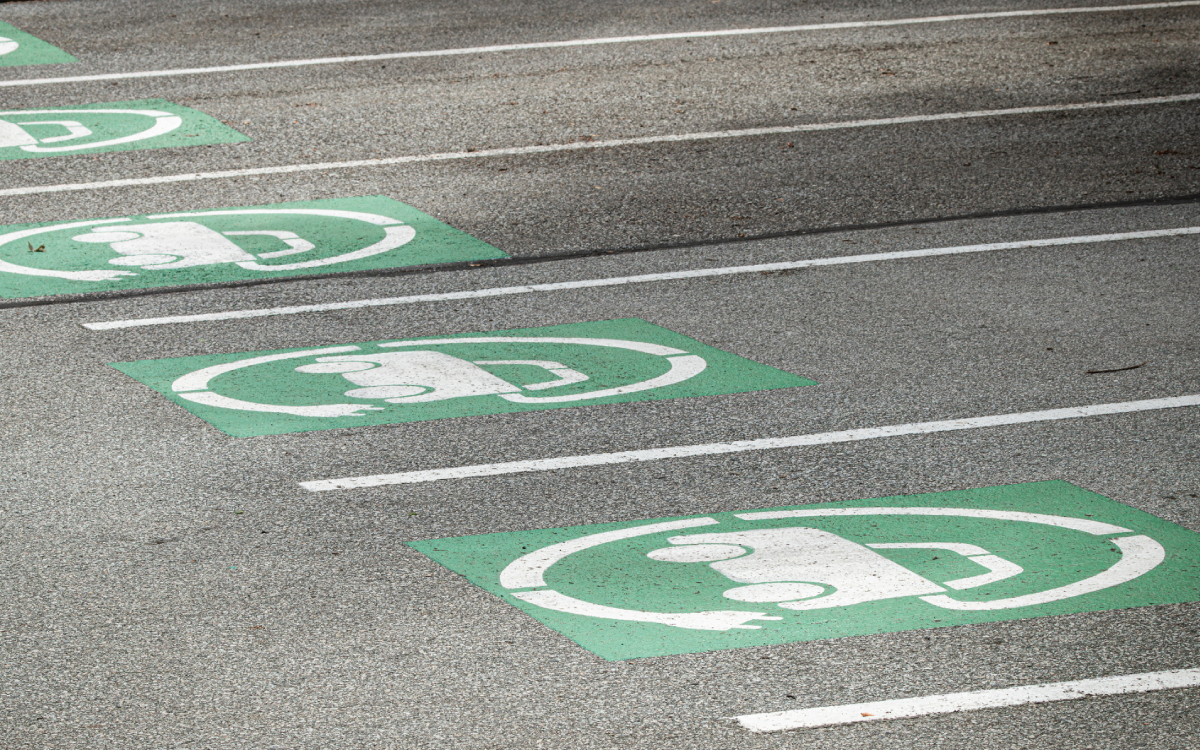
Public chargers usually take up parking stalls, which can leave a property short of the spaces a municipality requires. – iStock
Charging council finds red tape from governments and utilities slows or even stops public infrastructure projects
Companies that build public fast chargers for electric vehicles say municipal rules designed for new developments are slowing the rollout of chargers in existing parking lots, driving up costs and, in some cases, killing projects outright.
A survey titled Hearing from the experts: Survey findings on municipal approvals, utility connections, and public fast-charging deployment in Canada, released last week by the Canadian Charging Infrastructure Council (CCIC), found land-use requirements such as parking minimums, landscaping rules and site plan reviews are the most common sources of delay for fast-charging retrofits.
The survey from the national industry association drew responses from nine organizations – seven charging network operators and two engineering and construction contractors – with experience in eight provinces.
Multiple hold-ups
Seven of the nine respondents said parking minimums had held up at least one project in the past two years, more than any other factor. Chargers usually take up parking stalls, which can leave a property short of the spaces a municipality requires.
Seven of the eight respondents who answered the question reported moderate to extreme variation in how the same type of approval is handled by different municipalities within a single province.
Eight of the nine said a permit for a parking-lot retrofit should take less than three months. None of those who reported their typical timeline said approvals came that quickly, with typical waits ranging from three to 18 months.
Seven respondents reported abandoning a combined 54 sites over two years after securing agreements with site hosts. Half of those were due to municipal and utility bottlenecks, with 10 primarily because of municipal delays or denials and 17 because of utility connection delays or costs.
More data from The Atmospheric Fund
The findings echo a report released in September from The Atmospheric Fund (TAF).
TAF’s Red Tape Reduction Opportunities for the Province of Ontario report said some charging project approvals in the province have taken more than 30 months. It pointed to On the Run EV Fast Charge, which planned five fast-charging projects in Hamilton that stalled amid repeated municipal and utility delays and are now unlikely to proceed.
TAF wants Ontario to give municipalities a toolkit for streamlined permitting that defines how charging should be classified under zoning bylaws, or for the province to adopt an EV readiness policy similar to recent changes to Quebec’s construction code changes.
It also recommends opening surplus public land and parking facilities to charging operators, waiving parking fees for drivers using those chargers and dropping rents for operators, steps it estimates could cut charging costs for urban drivers by 33 to 65 per cent. And it calls for scrapping minimum parking requirements across Ontario.
‘A real opportunity’
The CCIC report is calling on municipalities to count charging stalls toward parking requirements, create a “minor works” or as-of-right pathway that spares simple retrofits from full permit review, publish clear requirements with a single point of contact and decide complete applications within three months.
“Municipalities have a real opportunity to use private investment to advance their environmental, affordability and equity goals,” said Travis Allan, the council’s president and chief executive, in a statement.
Some help is already here
Some municipalities and utilities are already moving to ease the bottlenecks. Toronto Hydro, the utility owned by the City of Toronto, launched a pilot in April (introduced at the EV and Charging Expo) that supplies 480-volt service directly to public fast-charging sites.
Most fast chargers run on 480 volts, but the utility’s transformers have typically delivered 600 volts, forcing developers to buy and maintain their own step-down equipment.
Under the pilot, which is capped at 10 projects and runs through the end of 2027, Toronto Hydro owns and maintains the 480-volt transformer, while customers pay for its installation.
Surrey, B.C., collaborated with various charging providers to clarify what station designs and locations would be eligible to be fast-tracked. And the municipality also publishes the City of Surrey Electric Vehicle Charger Installation, a framework outlining engineering requirements, for more clarity and to avoid back-and-forth revisions.


