


Clean energy consultancy joins with utilities, governments and an automaker in a project aimed at turning EVs into a resource for Canada’s power grid
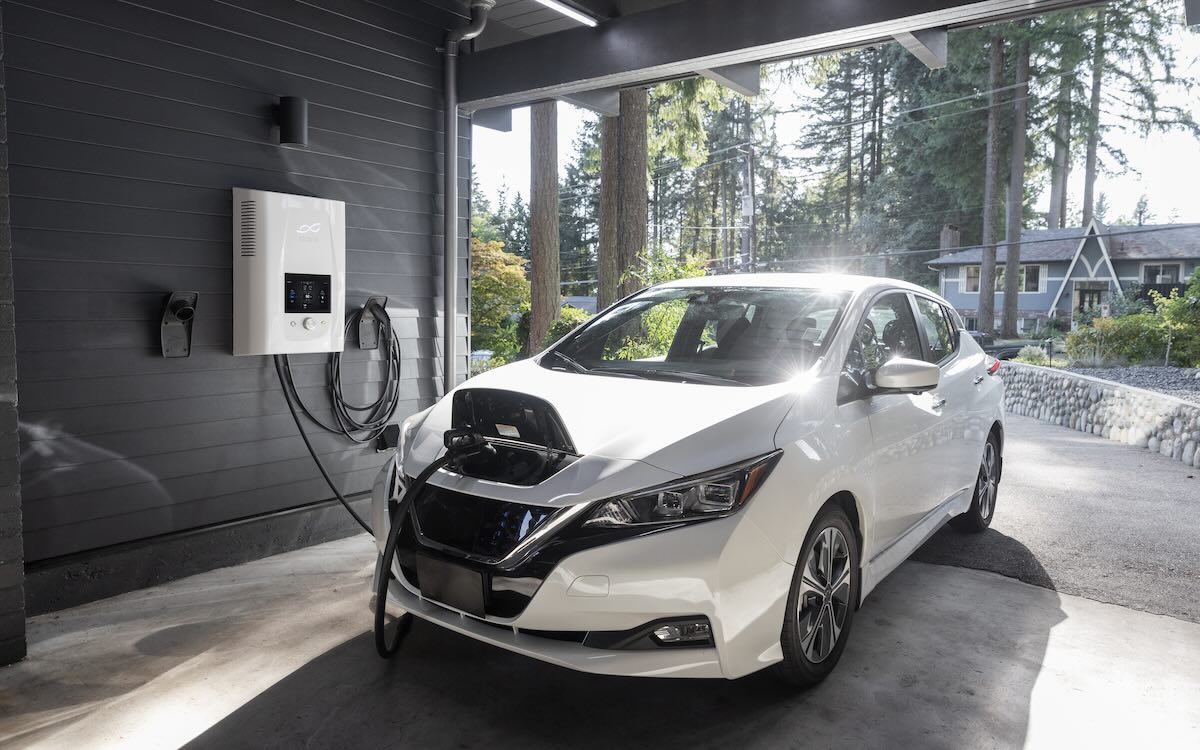
Mabel Fulford, a managing consultant with Dunsky, says a goal of the Canadian Vehicle-Grid Integration Alliance is to make managed charging and bidirectional capabilities “as easy as installing a dryer.”
Clean energy consultancy joins with utilities, governments and an automaker in a project aimed at turning EVs into a resource for Canada’s power grid
Dunsky Energy + Climate Advisors announced the creation of the Canadian Vehicle-Grid Integration Alliance. The group will work to align standards, investment and deployment practices so vehicle-grid integration, or VGI, can move beyond small pilot projects.
Funding partners include BC Hydro, Manitoba Hydro, Alectra (an Ontario utility) and the government of Nova Scotia. The Government of Canada, Electric Mobility Canada and the Vehicle-Grid Integration Council have signed on as strategic collaborators. General Motors is also supporting the effort.
Two different technologies
Mabel Fulford, a managing consultant with Dunsky, said in an interview with Electric Autonomy that the firm’s utility clients across the country kept running into the same questions and barriers on VGI. So did automakers and technology companies.
“(We) decided to proactively step up and help convene those partners together to enable the coordination,” she said.
Vehicle-grid integration rests on two technologies. Managed charging lets utilities control when EVs draw power, shifting charging to times when the grid isn’t under stress. Bidirectional charging, often called vehicle-to-grid or V2G, goes further: it lets a parked EV send electricity back to the grid when needed or power a home during an outage.
The long-term goal, she said, is for managed charging and bidirectional capability to come standard with an EV at the point of purchase, “through a process that’s as easy as installing a dryer.”
Bringing industries together
Getting there means bridging two industries that have rarely needed to collaborate.
“You’ve got basically two 100-plus-year-old industries: the automotive sector and the electricity sector,” Fulford said. “They’re both highly regulated sectors. They have very long planning lead times and they’ve never actually needed to work together before.”
Chargers, vehicles and utility systems must be able to communicate with one another, she said, and utilities need programs that pay customers for the power they supply.
The technology isn’t new, Fulford said. Large pilot projects are now under way in the United Kingdom, Europe, Australia and the U.S, but Canada is “only at the very beginning” of seeing the technology reach the market.
Harmonizing standards
Scale is a key hurdle. Automakers design products for global or large regional markets and can’t build a different vehicle for each Canadian utility. But Fulford also notes the Canadian vehicle market is roughly the size of California’s — the largest passenger vehicle market in the U.S.
If vehicle and utility standards here were harmonized, “it becomes a much more accessible and addressable market for technology companies, which includes automakers and all of the enabling companies along the chain,” she said.
“Part of the alliance’s goals is to minimize those barriers for products that are designed for the U.S. market to be able to bring them into Canada.”
Long timelines a challenge
Long timelines make the work urgent. It takes about 18 months to adopt a standard once it is finalized and utilities also need time to gather data and convince regulators the investments are cost-effective for ratepayers.
Philippe Dunsky, the firm’s founder and president, said in a statement that Canada is preparing to double its electricity grid “and we’ll need every tool in the toolkit to do it affordably.”
“Canada has seen promising pilots,” he said. “The next step is turning them into scalable programs, and that will take utilities, automakers, regulators and governments working together.”
Starting this fall, alliance partners will hold working sessions on four areas: market alignment, standards and interoperability, investment and regulatory pathways, and deployment and customer experience.
The group’s first deliverable will be an online VGI Knowledge Centre, expected later this fall.


