


McGill University research on winter operations shows high energy use of DC fast charging makes big impact on total cost of ownership
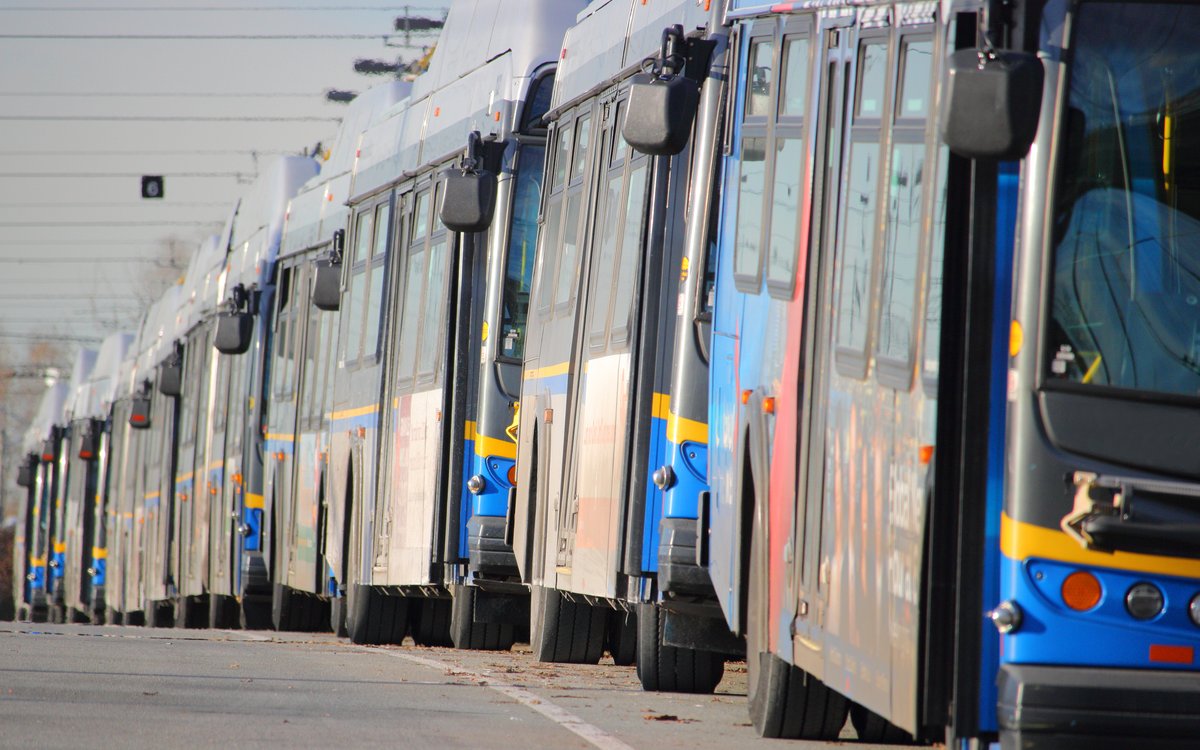
Electric bus fleets would benefit from slower charging, according to a study by McGill University. — iStock
McGill University research on winter operations shows high energy use of DC fast charging makes big impact on total cost of ownership
Slower charging and more vehicles lower the total cost of ownership (TCO) of electric bus fleets in the winter, according to a recent McGill University study.
The study, Planning resilient electric bus operations in cold regions: An agent-based simulation-optimization framework, notes that winter months increase fleet energy demand by up to 30 per cent, with lower temperatures not only affecting the battery, but also necessitating heating of the passenger space.
According to the study: “While fast charging reduces upfront investment, its high contracted power costs make it more expensive over time. On the other hand, slow charging [with more buses] is more capital-intensive, but yields lower operational costs and smoother grid integration.”
Power spikes
McGill researchers chose Quebec City’s transit fleet for the study, as they already had some preliminary data. The city currently has a mix of diesel and hybrid-diesel buses. The 10 busiest routes of the transit system were used for the study.
Jônatas Augusto Manzolli, a postdoctoral researcher on the study, said in an interview with Electric Autonomy that power usage is a deciding factor in designing economically viable electric fleets. On top of more expensive DC fast charging equipment, large spikes in power usage will result in higher electricity costs.
“For the specific case in Quebec City, what we observe is that when you’re relying on fast charging, the power taken from the grid is huge,” said Manzolli. “It can be around 20 megawatts, which is close to that of a small neighbourhood.”
Millions in savings
The study found that, over 10 years, the estimated TCO of $149.8 million with a fast-charging model would be roughly 7 per cent higher — or around $10.5 million more — than the slow-charging alternative.
“There’s a trade-off, because in terms of the capex [capital expenditures], when you go to fast chargers, you can reduce your capex. It can be a smaller fleet, and the battery capacity can be smaller, so you have a gain on the capex.
“But the long term … is when you can see the increase in cost.”
This framework would obviously make the transit fleet more efficient in summer months as well, acknowledges Manzolli.
Help for all municipalities
To spread their learnings so far, the McGill researchers have put together a platform called Nextdriv, an official McGill University spin-off co-founded by Manzolli and Luis Miranda-Moreno, a professor in the Civil Engineering department at McGill, that uses its methodology to help municipalities, large and small, with planning electric transit fleets.
Other studies by the McGill researchers are also in the works for cities such as Toronto, Lévis, Que., and Montreal.
Manzolli says that every transit system is unique and there is no one-size-fits-all answer. But this type of study would give planners a leg up by combining various data sets – including vehicle specifications, weather, routes, and other factors — together for real-world solutions that apply to their own municipality.
“When we are advocating for [electric] public transportation, I would say that a lot of people say it’s not feasible, it’s difficult. That’s probably because the pilot projects were not really well-designed,” said Manzolli.
“With this study, we propose we could have a more realistic assessment of an electric bus fleet that doesn’t exist yet.”


