


Federal government has invested heavily in mining and manufacturing, but grid storage and recycling could turn waste into a domestic industry, writes Donald MacCallum
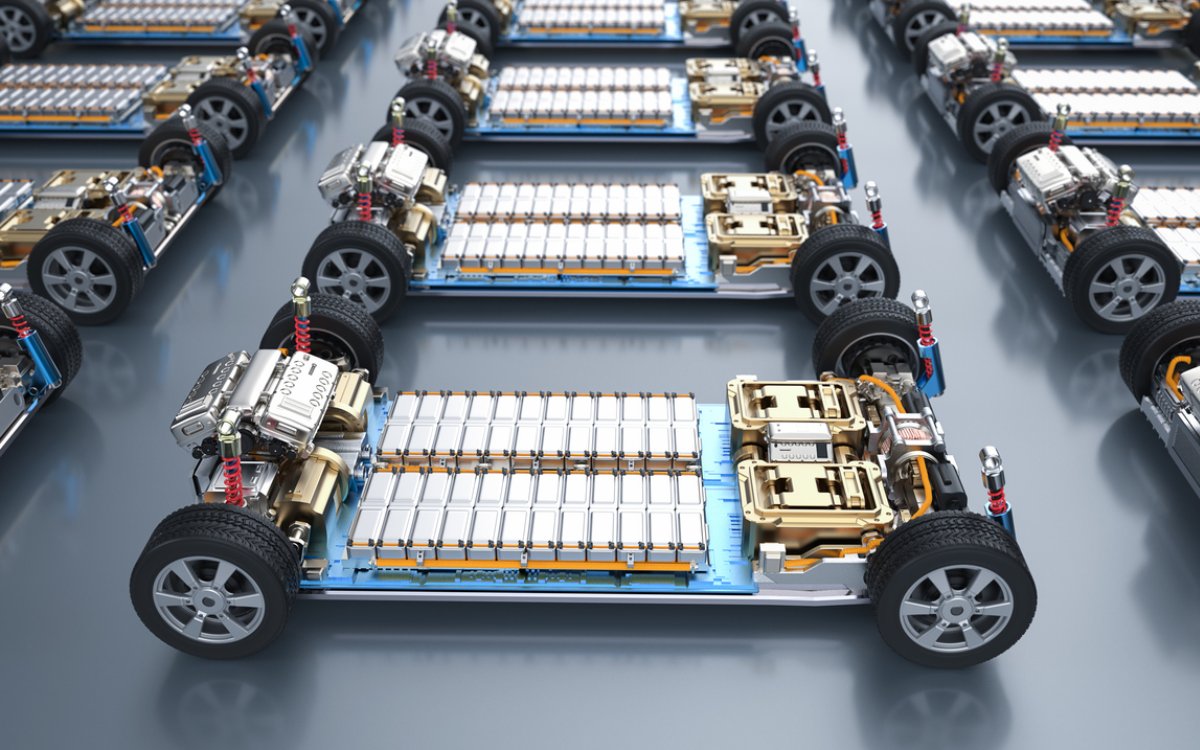
Canada has more than 1 million EVs registered on our roads. – iStock
Federal government has invested heavily in mining and manufacturing, but grid storage and recycling could turn waste into a domestic industry, writes Donald MacCallum
The Canadian government has committed billions to the establishment of an electric vehicle supply chain and becoming a global manufacturing powerhouse. This includes investments from upstream mining and refining to downstream battery manufacturing.
But when it comes to handling EV batteries at end of life, the investment has been lacking. There is a substantial opportunity to develop the missing pieces of the value chain and create a more circular domestic economy around the battery lifecycle with repurposing and recycling.
Private companies such as Moment Energy, Call2Recycle, Lithion Technologies and others have led the way in recycling, repurposing and/or disposing of used EV batteries.
But there is room for growth with government investment.
Future potential
According to the Ellen MacArthur Foundation, the circular economy — an economic model that keeps products and materials in use for as long as possible — across three major sectors in the United States, one of which being EV batteries, has a potential value of US$1.5 trillion.
Currently, Canada has around 1 million battery electric vehicles (BEVs) and plug-in hybrid electric vehicles (PHEVs) combined registered on our roads, and the government’s plan is to have 75 per cent of all vehicle sales be zero-emission by 2035. All of these batteries will have to be dealt with at end of life.
Developing a homegrown circular battery supply chain would not only allow the country to capture this economic value domestically, but would also position Canadian firms to compete in the broader North American market.
The circular value chain
Many EV batteries that are no longer suitable for use in a vehicle (at 70 per cent to 80 per cent capacity) may still retain sufficient capacity for secondary applications. Rather than immediately sending these batteries for recycling, retired EV batteries can be used for grid-level energy storage, including applications supporting renewable generation such as wind and solar.
When a battery is exhausted and its capacity is less than 60 per cent of its original manufacturing capacity, it goes to recycling. The battery is shredded into a “black mass,” which can then be processed here in Canada or shipped abroad to extract valuable metals.
Recovered materials would be supplied back into Canada’s growing battery manufacturing industry, turning a current supply gap into a future economic opportunity.
Further development
Canada has already seen several downstream battery-material projects paused or abandoned, including GM and POSCO Future M’s cathode plant expansion as well as planned cathode project from Ford.
Adopting international expertise and strengthening upstream-downstream partnerships could provide the spark to potentially revive some of these projects.
With the cultivation of these facilities comes the possibility of further industrial development around them.
Collection facilities, battery testing and dismantling operations, second-life battery companies, recycling facilities, chemical processors and battery manufacturers would all become connected joints in the EV battery circular value chain.
And none of this is beyond executing. In fact, it’s already happening in other parts of the world.
The EU, for instance, passed regulation in 2023 establishing comprehensive requirements for battery recycling, including recovery thresholds for key materials, allowing them to be reapplied downstream.
Consolidating a fragmented approach
The largest logistical challenge in connecting the upstream and downstream battery processing capacity in Canada is that EV batteries are hazardous materials and their transportation, handling and storage are subject to localized regulations.
The lack of a coordinated national approach to end-of-life battery management creates additional costs and complexity as batteries are sorted, transported and processed.
Canadian regulators would work with industry to establish clearer standards for the collection, transportation, repurposing and processing of end-of-life batteries, while encouraging investment in the infrastructure required to close the circular value chain.
The economic bottom line
Having a domestic homegrown industry for the circular economy value chain will allow Canadian industry to capture the immense value lying therein, while greatly contributing to lowering the overall emissions of the EV lifecycle.
By addressing the gaps, Canada stops acting purely as a raw material extractor or end-value battery market, but instead creates a self-sustaining loop that enables greater potential for investments and job creation in local industry further contributing to the growth of the domestic circular economy.

Donald MacCallum works at DIANA, a NATO body that supports start-ups advancing sustainable and responsible technology development, with previous experience at S&P Global and the United Nations Capital Development Fund. He is also a member of several Calgary-based NGOs, focused on developing sustainable climate action.


