


Ottawa says the plan could double grid capacity by 2050, expand clean power and develop up to $15 billion in energy savings
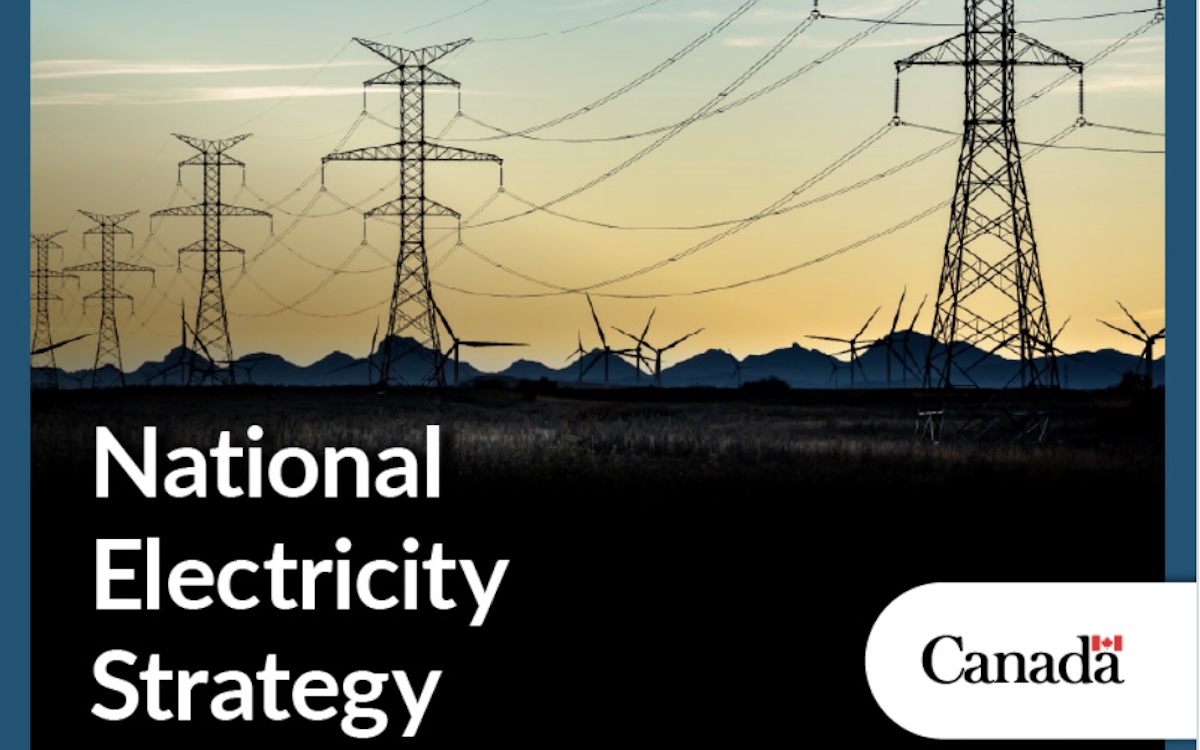
The federal government is consulting on a plan to reduce energy costs and boost production by 2050. Photo: Prime Minister of Canada/X (formerly known as Twitter)
Ottawa says the plan could double grid capacity by 2050, expand clean power and develop up to $15 billion in energy savings
The federal government has unveiled a National Electricity Strategy that it says will shape the future of Canada’s power sector.
By 2050, the government wants to double grid capacity and build enough clean, reliable and affordable power to meet rising demand. A successful rollout will require synchronized action by provinces, territories, Indigenous Peoples, power generators, utilities and labour partners.
“This strategy will require major investments to generate more clean energy, connect our fragmented electricity grids, train and retain tens of thousands of skilled Canadian workers, and strengthen Canadian manufacturing so more of the technologies powering our grid are made here at home,” reads the government’s announcement.
Structure of the plan
The National Electricity Strategy is structured around four key pillars:
- Build the infrastructure needed to double Canada’s electricity generation: This will require generational investments in generation, transmission, distribution, storage, and grid modernisation. These federal consultations will look at how to finance that build-out, spread costs out over time and keep energy affordable while maintaining Canada’s competitiveness
- Connect Canada’s fragmented grids east, west and north through new and expanded transmission lines: Canada’s electricity system is currently fragmented across provincial and territorial grids, a structure the federal government says costs billions of dollars in outages, duplicative infrastructure, and wasted power. The consultations will tackle common barriers to interprovincial interties, with the aim of moving more reliable, affordable power to all Canadians.
- Train, attract, and retain the talent needed to build the grid of the future: Doubling the grid will require more than 130,000 high-skilled workers by 2050. Through these consultations, the federal government will work with industry, labour, and training partners to develop solutions to train, attract, and retain the talent needed to build and maintain the grid of the future.
- Make more of the technologies and components powering our grid here at home: As Canada builds the clean economy of the future, the federal government says domestic industries need to be positioned to seize emerging opportunities. These consultations will explore how to grow domestic manufacturing capacity so that more of the components powering our grid are made in Canada.
Growing from a position of power
The government says 80 per cent of Canada’s power is non-emitting and that the country has “some of the lowest electricity costs in the G7.”
“Working alongside provinces, territories, Indigenous Peoples, and industry, we will keep reliability high and bills low as we expand clean power for all Canadians and connect our grids from coast to coast to coast,” reads a statement from Tim Hodgson, minister of energy and natural resources.
But behind those national numbers are regional gaps and inefficiencies that have complicated provincial energy planning, including the work needed to support broader EV adoption.
That is where goals like doubling grid capacity come into play, along with the potential to unlock new technologies like vehicle-to-grid systems, which could allow EVs to feed power back into the grid at scale.
The data behind the strategy
To help identify the priority areas for improving Canada’s energy grids, the government is drawing on the findings of its paper, Powering Canada Strong: A National Strategy for an Electrified Canadian Economy.
More than anything, the paper positions energy as “fundamental to competitiveness, energy security, and economic sovereignty.”
It also projects that through “mass electrification” approximately 70 per cent of households could pay less for their energy by 2050.
That could yield up to $15 billion in savings.
But in order to realize those savings, major investments in new and existing projects will be required.
“Through the Major Projects Office (MPO), we are advancing clean electricity generation projects – including hydroelectric projects like the Taltson Hydro Expansion in the Northwest Territories and the Iqaluit Nukkiksautiit Hydro Project in Nunavut, nuclear generation projects such as Darlington New Nuclear in Ontario, clean electricity transmission lines like the North Coast Transmission Line in British Columbia, and major wind developments like Wind West in Nova Scotia,” reads the announcement.
“[W]e are also expanding support for energy-saving retrofits for up to one million households through financing, grants, and complementary measures.”
The government has not yet disclosed the estimated budget for implementing its National Electricity Strategy. It does promise, however, that consultations will take place in the coming months, with stakeholders expected to “work together to identify the actions needed to double our grid most effectively and affordably.”


